Why this matters
Inventory problems often show up too late. By the time an item is completely out, the real issue has already become a missed sale, a delayed job, or a rushed purchase.
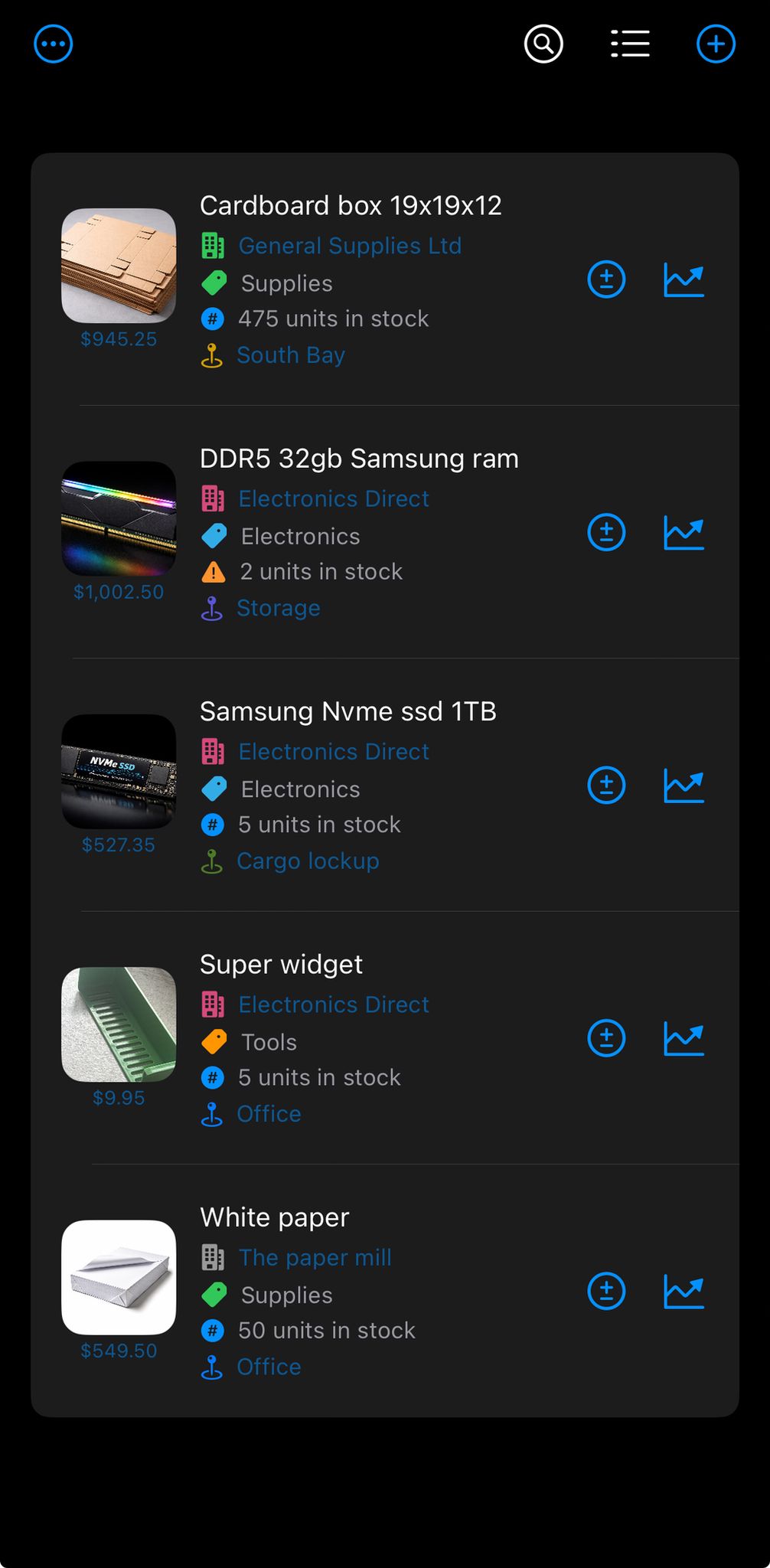
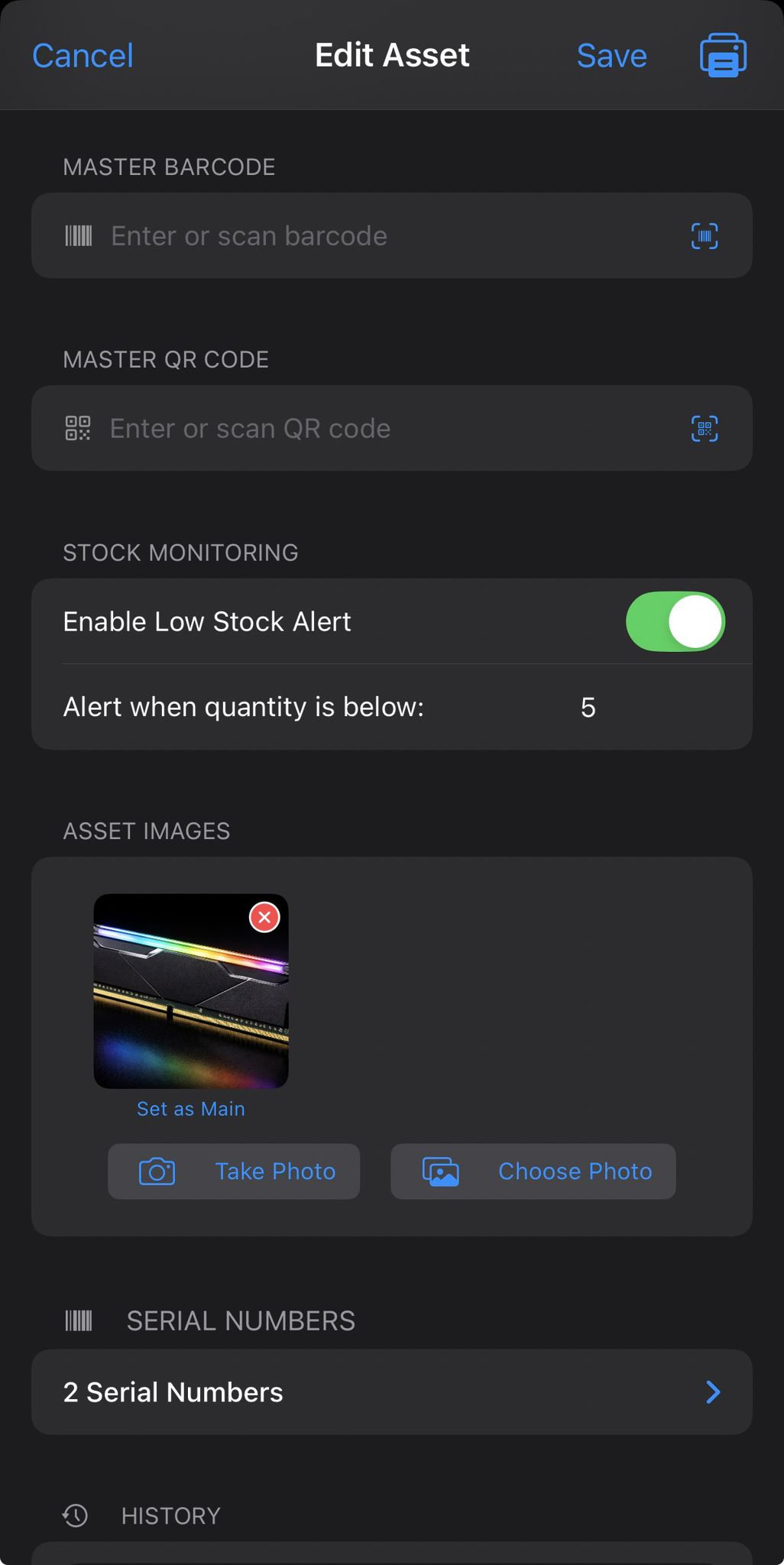
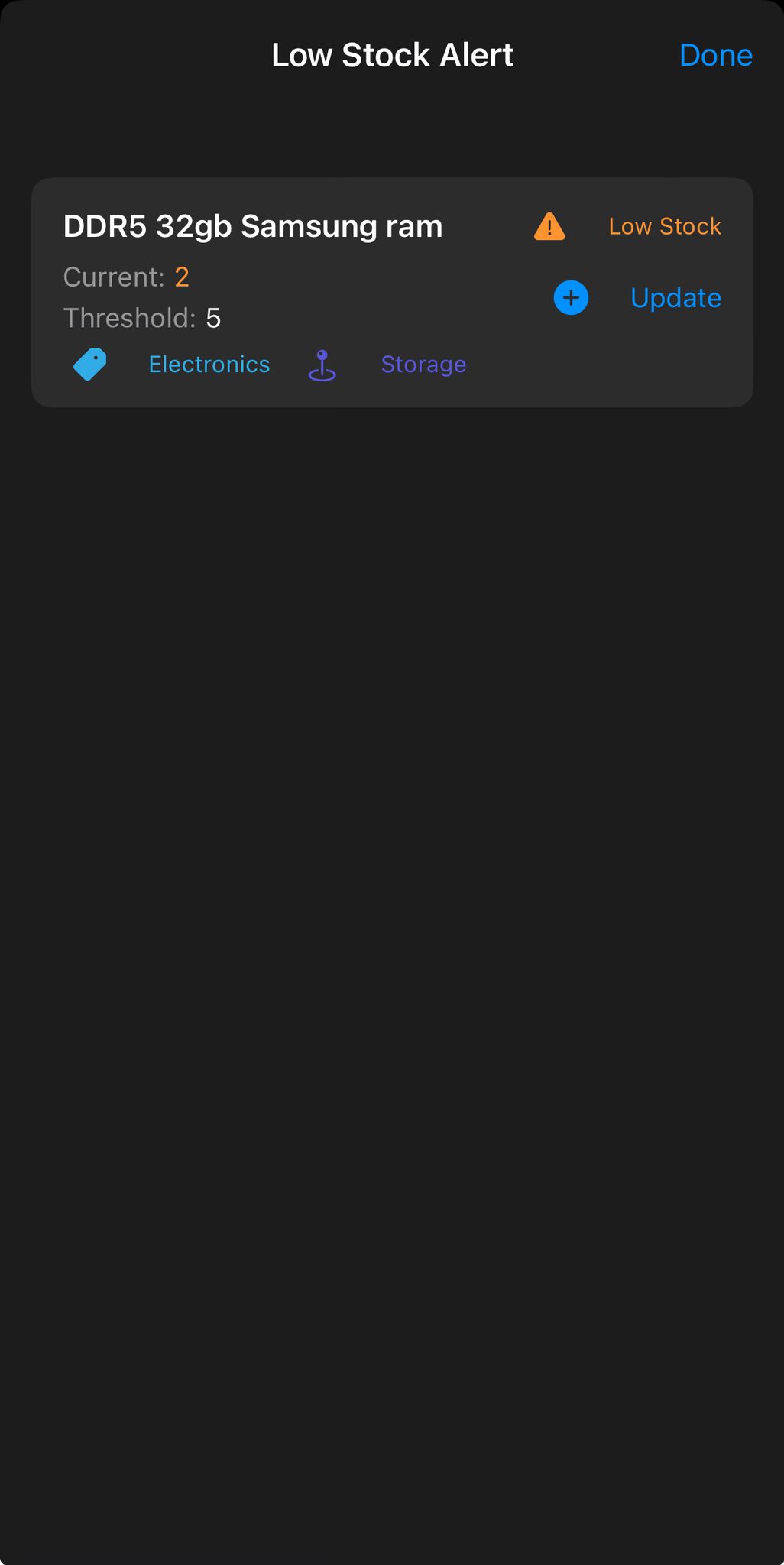
Threshold-based alerts help users catch shortages earlier so they can reorder before stockouts disrupt sales or jobs.
Inventory problems often show up too late. By the time an item is completely out, the real issue has already become a missed sale, a delayed job, or a rushed purchase.
Low-stock alerts turn stock control into a proactive workflow instead of a last-minute reaction.
Teams usually set a minimum quantity based on how quickly an item moves and how long it takes to replace. That minimum is rarely the same for every item. Fast-moving or long-lead-time items deserve more attention than slow-moving items that can be replaced the next day.
A genuine product site should explain what low-stock alerts are for and how they help, rather than just listing them as a one-line feature.
No. Thresholds are usually more useful when they reflect item criticality and replacement time.
No. Trades, maintenance teams, and workshops often benefit just as much because missing one part can delay an entire job.
No. Alerts are a decision aid, not a substitute for accurate counting and disciplined stock updates.
Visit the support section for workflow questions and issue reporting.
Useful when stockouts are costly and you want earlier warning before they happen.
Download free Download StockM8
Free on the App Store
Download StockM8
Free on the App Store